Substance Use Disorder (SUD):
Understanding It and Getting the Right Help
Understanding Substance Use Disorder (SUD) helps individuals recognize warning signs early and seek the right support for lasting recovery and healthier daily living.

Substance Use Disorder (SUD), commonly called SUD, is not a moral failure or a lack of willpower. It’s a complex brain condition and one that millions of Americans are quietly fighting every single day. If you or someone you care about is struggling with substance use, the most important thing to know is this: help is available, and recovery is absolutely possible. At Safer Psychiatry, our telehealth psychiatric care includes expert support for individuals dealing with SUD alongside other mental health conditions. Through psychiatric evaluations, counseling and therapy, and medication management, we provide compassionate, judgment-free care designed to support long-term recovery.
According to the Substance Abuse and Mental Health Services Administration (SAMHSA), approximately 46.3 million Americans aged 12 and older met the criteria for substance use disorder in 2021. The National Institute on Drug Abuse (NIDA) further highlights that nearly half of people with SUD also have a co-occurring mental health condition, something our team at Safer Psychiatry is specifically equipped to treat.
What Is Substance Use Disorder (SUD)?
Substance Use Disorder (SUD) is a medical condition characterized by an uncontrolled use of substances, including alcohol, prescription drugs, or illegal drugs, despite harmful consequences. People with SUD often can’t stop even when they want to. The substance changes the brain’s reward system, making cravings feel overwhelming and self-control feel impossible. SUD exists on a spectrum from mild to severe. An early diagnosis through a thorough psychiatric evaluation is one of the most important steps toward recovery.
Common Types of Substance Use Disorder
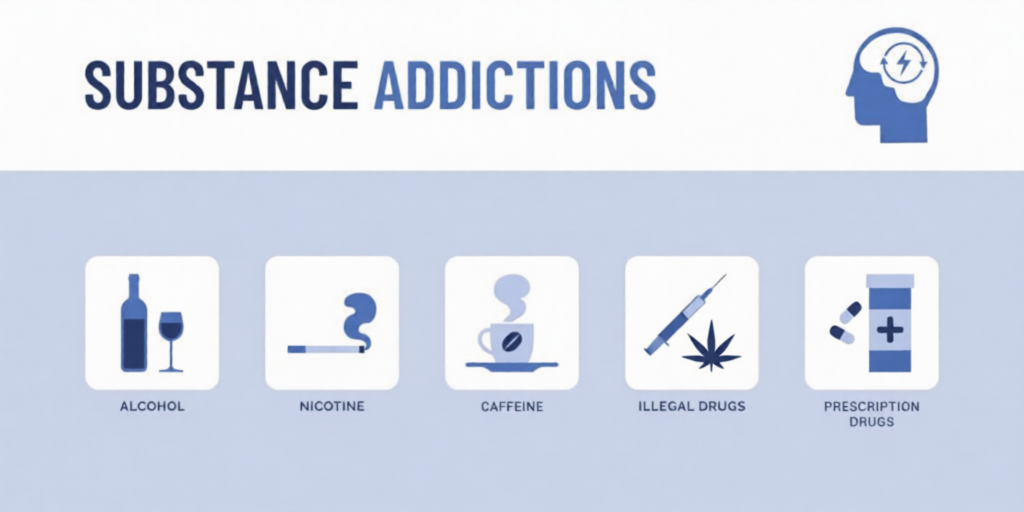
SUD can involve many different substances. The most commonly seen types include alcohol use disorder, opioid use disorder, stimulant use disorder (cocaine, methamphetamine), cannabis use disorder, and prescription sedative/benzodiazepine use disorder. Each type has unique patterns and challenges, which is why cookie-cutter treatment plans rarely work. At Safer Psychiatry, our counseling and therapy sessions are fully tailored to your specific substance, history, and goals.
Signs You or Someone You Love May Have SUD
Recognizing Substance Use Disorder early makes a huge difference in treatment outcomes. Common warning signs include using more of a substance than intended, failed attempts to cut back, spending significant time obtaining or recovering from substance use, cravings, neglecting responsibilities, continuing to use despite relationship or health problems, and developing tolerance or withdrawal symptoms. If several of these signs feel familiar, it may be time to contact Safer Psychiatry for a compassionate, confidential evaluation.
SUD and Co-Occurring Mental Health Conditions
One of the most important things to understand about Substance Use Disorder is that it rarely comes alone. Depression, anxiety, PTSD, and BPD are all commonly linked to SUD. In fact, many people develop SUD as a way to self-medicate emotional pain they don’t know how to manage. At Safer Psychiatry, we’re equipped to treat both conditions at the same time through a collaborative care approach. We may also incorporate herbal remedies and music therapy into a well-rounded treatment plan for whole-person healing.
Treatment Options for Substance Use Disorder
Recovery from SUD looks different for everyone. At Safer Psychiatry, treatment may include a full psychiatric evaluation to understand substance use disorder (SUD) what’s driving substance use, therapy to build coping skills and emotional regulation, medication management to ease withdrawal symptoms or reduce cravings, and ongoing support through our convenient telehealth platform. You don’t need to walk into a clinic or feel embarrassed. Our online services are private, accessible, and genuinely effective.
FAQ
Frequently Asked Questions
Can Substance Use Disorder be cured?
SUD is a chronic condition, but it is very manageable with the right treatment. Many people achieve long-term recovery and live healthy, fulfilling lives.
Does SUD always involve illegal drugs?
No. SUD includes alcohol, prescription medications, and over-the-counter substances as well as illegal drugs.
Can mental health treatment help with SUD?
Absolutely. Treating co-occurring mental health conditions like depression or anxiety is often essential for successful SUD recovery.
How do I help a loved one with Substance Use Disorder?
Approach them with empathy, avoid shaming language, and encourage professional help. You can also reach out to Safer Psychiatry on their behalf to learn about treatment options.
Substance Abuse vs. Substance Use Disorder: What's the Difference?
Substance abuse refers to a pattern of harmful use, while Substance Use Disorder is the clinical diagnosis that includes dependency, loss of control, and significant life impairment.