
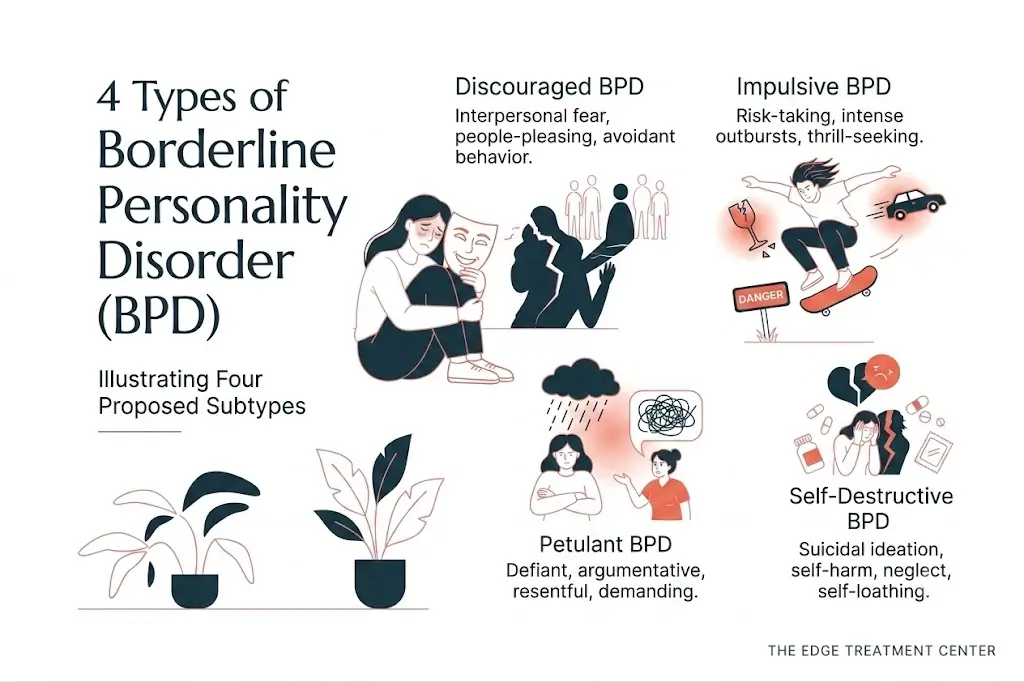
Understanding complex mental health conditions requires breaking information down into clear, accessible pieces. When dealing with emotional instability, having access to resources and blogs written in easy-to-read words can make a world of difference for individuals and their families. Learning about the 4 types of Borderline Personality Disorder (BPD) can help you better recognize symptoms, understand behaviors, and explore the most effective treatment options. Borderline Personality Disorder is not a one-size-fits-all condition; it manifests differently from person to person. If you or someone you love is navigating these intense emotional waves, partnering with a dedicated clinic like Safer Psychiatry can provide the guidance and clarity needed to start healing.
What Are the 4 Types of Borderline Personality Disorder?
While the core features of the condition involve intense emotions and unstable relationships, psychologists recognize 4 Types of Borderline Personality Disorder (BPD) to better categorize how people experience these challenges. These four categories include discouraged BPD, impulsive BPD, petulant BPD, and self-destructive BPD. Utilizing educational tools and blogs read to easy words helps individuals identify which specific patterns resonate most with their personal struggles. Identifying these categories is the first step toward finding a targeted approach to managing daily symptoms.
Understanding the Different Subtypes of Borderline Personality Disorder
The concept of specific categories comes from the work of psychologist Theodore Millon, who identified distinct subtypes of borderline personality disorder to explain why two people with the same diagnosis can act so differently. Exploring these variations through specialized medical content and blogs read with easy words allows patients to move past general stigmas and focus on their unique traits. For many individuals, structured medication management plays a vital role in stabilizing mood swings, reducing anxiety, and helping them gain better control over their day-to-day emotional responses.
Discouraged Borderline Personality Disorder: Symptoms and Traits
The discouraged variety is frequently referred to as “quiet BPD” because individuals direct their intense emotional pain inward rather than outward. Those who read clinical guides or blogs with easy words will find that discouraged individuals often appear high-functioning, calm, and compliant on the outside while suffering from deep feelings of emptiness, codependency, and a severe fear of abandonment on the inside. Because they bottle up their anger and sadness to avoid conflict, their immense emotional pain often goes completely unnoticed by friends, co-workers, and family members.
Impulsive Borderline Personality Disorder: Signs and Behaviors
The impulsive variant stands in stark contrast to the quiet type because emotions are expressed outwardly and immediately. People looking for clear answers in mental health articles and blogs read with easy words will see that this type is characterized by a high drive for excitement, a low tolerance for boredom, and sudden, risky actions without considering the long-term consequences. This can manifest as reckless driving, sudden spending sprees, or abruptly ending stable relationships because of a minor misunderstanding or a sudden shift in mood.
Petulant BPD: Common Symptoms, Causes, and Treatment
When an individual struggles with petulant BPD, they often experience a profound mix of underlying anger, stubbornness, and a constant feeling of being unappreciated or misunderstood by the world. Educational resources and blogs read to easy words describe this pattern as a constant cycle of defying others, expressing deep resentment, and swinging rapidly between loud outbursts and sullen silence. This behavior typically stems from deep-rooted insecurities and an intense fear of being let down or abandoned by the people they rely on most.
Self-Destructive BPD: Warning Signs and Recovery Options
Individuals dealing with self-destructive BPD tend to turn their intense inner pain, anger, and self-hatred directly against their own physical and mental well-being. When researching recovery paths in medical literature or blogs read with easy words, it becomes clear that warning signs include risky behaviors, neglecting physical health, and intentional self-harm. To help tailor a precise recovery plan, advanced tools like genetic testing can assist clinicians in identifying how a patient’s body might respond to specific mood-stabilizing medications.
How Are the Subtypes of Borderline Personality Disorder Diagnosed?
Mental health professionals do not usually give a separate formal diagnosis for each individual variant, but they use these categories to deeply personalize your care plan. Reading professional assessments and blogs read with easy words shows that doctors look closely at long-term behavioral patterns, relationship histories, and emotional triggers during a psychological evaluation. Pinpointing these specific behavioral trends helps your care team understand whether you tend to lash out, withdraw, act impulsively, or harm yourself when under stress.
Treatment Options for All Types of Borderline Personality Disorder
The great news is that all variations of this condition are highly treatable with the right combination of professional therapy and modern psychiatric support. Comprehensive care guides and blogs written in easy words highlight Dialectical Behavior Therapy (DBT) as the gold standard treatment, as it teaches core skills like mindfulness, emotional regulation, and distress tolerance. Combining specialized talk therapy with targeted medical management helps individuals retrain their brains to pause, process intense feelings, and choose healthier responses to emotional triggers.
Can Someone Have More Than One Borderline Personality Disorder Subtype?
Human emotions are fluid, meaning it is incredibly common for an individual to display symptoms from more than one category at the exact same time. Informative medical summaries and blogs read with easy words explain that a person might primarily struggle with quiet, discouraged traits during calm periods but shift into impulsive or petulant behaviors during times of extreme stress or relationship conflict. Your symptoms can evolve over time as you grow, experience different life events, or make progress in your therapy sessions.
When to Seek Professional Help for Borderline Personality Disorder
If intense mood swings, unstable relationships, or sudden impulses are making it difficult to maintain a job or enjoy daily life, it is time to connect with a specialist. Seeking guidance from clinical teams and reading blogs with easy-to-understand words can demystify the process of reaching out, proving that asking for help is a sign of immense strength rather than weakness. You do not have to wait for a severe emotional crisis to occur before giving yourself permission to receive professional clinical support.
Living Well with Borderline Personality Disorder: Coping Strategies
Building a stable, fulfilling life while managing emotional sensitivity is entirely possible when you practice healthy daily coping mechanisms. Exploring wellness tips and blogs read with easy words can introduce you to practical habits like maintaining a predictable daily routine, practicing slow breathing during high stress, and building a strong, patient support network. Learning to label your intense feelings as temporary emotional storms rather than permanent realities helps reduce their power over your daily choices.
Final Thoughts
Navigating the complexities of emotional health becomes a much smoother journey when you have access to clear information and an experienced, empathetic care team. Understanding how your mind processes stress is the foundation for building lasting emotional stability and healthier, happier relationships. Learning about the four types of Borderline Personality Disorder (BPD) can help you recognize symptoms early, seek the right treatment, and take meaningful steps toward long-term emotional well-being. If you are ready to take the next step toward healing and balanced well-being, please reach out to Safer Psychiatry and contact us today to learn more about our personalized care options.
Frequently Asked Questions
Q1: What is the difference between quiet BPD and typical BPD?
Quiet BPD turns emotions inward, while typical BPD expresses them outward.
Q2: Can Borderline Personality Disorder be treated?
Yes. Therapy, especially DBT, helps many people manage symptoms and improve their quality of life.
Q3: How does DBT help people with BPD?
DBT teaches emotional control, stress management, mindfulness, and healthy relationship skills.
Q4: Is medication necessary for all types of BPD?
No. Medication may help with anxiety or depression but does not treat BPD itself.
Q5: How can I support someone with BPD?
Stay calm, set healthy boundaries, offer support, and encourage professional treatment.


