Genetic testing provides valuable insights into your DNA, helping you understand inherited conditions, identify potential health risks, and learn how your body may respond to certain medications. However, different tests serve different purposes, from identifying family-related genetic disorders to screening for conditions before birth. Understanding the types of genetic testing can help you make informed decisions about your health and choose an option that matches your needs. This guide explores the main types of genetic tests, their benefits, limitations, and common uses. To learn more, explore our genetic testing services.
What Are the Main Types of Genetic Testing?
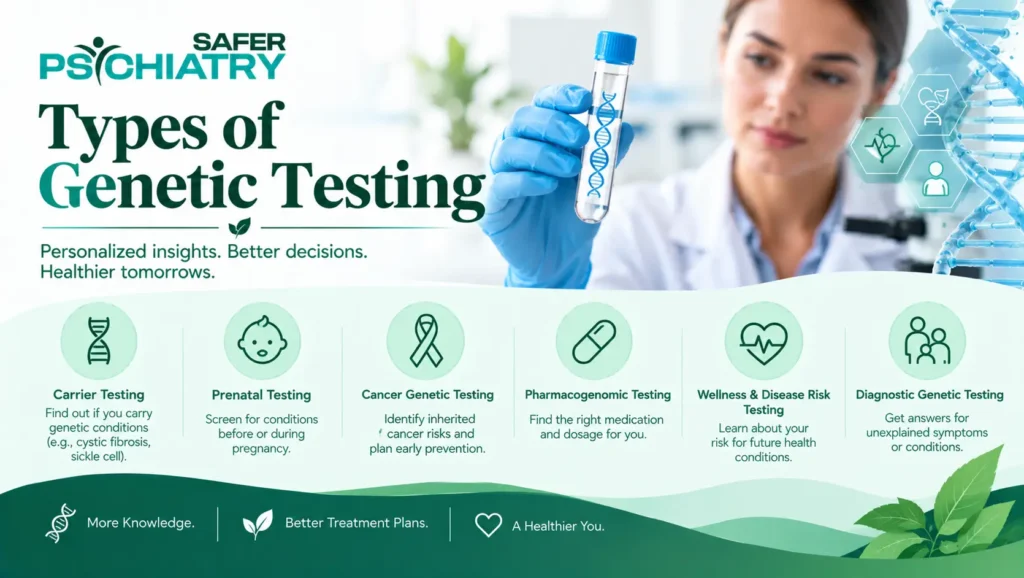
Genetic tests fall into groups based on purpose: diagnostic, predictive, carrier, prenatal, newborn, pharmacogenomic, and cancer risk testing. Each analyzes DNA, chromosomes, or proteins, usually from blood or saliva, though some use a cheek swab. What changes are the question being asked about? A test built to confirm a suspected diagnosis works differently from one meant to flag a risk decades before symptoms ever show up. Knowing the category first makes everything else easier to sort out.
How Diagnostic Genetic Testing Identifies Inherited Conditions
Diagnostic testing is what doctors order when symptoms already exist. If a child has unexplained developmental delays or an adult shows signs of something like cystic fibrosis, this test hunts for the specific gene change behind it. Results can confirm a diagnosis, rule one out, or point somewhere unexpected. It’s often the end of a long, frustrating search.
Predictive and Presymptomatic Genetic Testing Explained
These tests are for people who feel fine. They look for gene variants that raise the chance of developing a condition later. Presymptomatic tests, like those for Huntington’s disease, point to a near-certain outcome. Predictive ones, like some for hereditary breast cancer, only shift the odds. Big difference. A positive result isn’t a diagnosis, and a negative one isn’t a guarantee, which is why many people book counseling first.
Carrier Screening for Inherited Genetic Disorders
Carrier screening checks whether you carry one copy of a gene change linked to a recessive disorder. Carriers usually have no symptoms at all. Trouble comes when both partners carry the same variant, which gives each pregnancy a 25 percent chance of an affected child. Standard screens cover cystic fibrosis and sickle cell disease, while expanded panels check hundreds of conditions. Ideally you’d do this before conceiving.
Prenatal Genetic Testing for Pregnancy Health Insights
Prenatal testing splits into screening and diagnostic. Screening, like the cell-free DNA blood test offered from around week 10, estimates the likelihood of conditions such as Down syndrome. It can’t confirm anything. Diagnostic options like amniocentesis analyze the baby’s actual cells and give definitive answers, but they carry a small miscarriage risk. Your provider can help you weigh age, family history, and ultrasound findings. Take your time.
Newborn Genetic Screening for Early Detection
In the United States, nearly every baby gets a heel-prick blood test within the first couple of days of life. It screens for dozens of rare but treatable conditions, like phenylketonuria. Catching one early can prevent serious harm, sometimes with something as simple as a special diet. And a positive screen doesn’t mean the baby has the condition; it means follow-up testing is needed.
Pharmacogenomic Testing for Personalized Medication
Ever wonder why the same drug works wonders for one person and barely registers for another? Genes are part of the answer. Pharmacogenomic testing looks at variants that affect how your body processes certain medications, including some antidepressants, blood thinners, and pain drugs. If you’re already on psychiatric medication, our medication management team can help you make sense of the results. Doctors can use the results to adjust a dose or pick a different option from the start, instead of cycling through trial and error.
Genetic Testing for Cancer Risk Assessment
Hereditary cancer testing looks at genes like BRCA1, BRCA2, and those tied to Lynch syndrome. Roughly 5 to 10 percent of cancers are thought to be hereditary, so most don’t trace back to an inherited variant. Doctors usually suggest testing when several relatives had cancer, especially at young ages. A positive result may open the door to earlier screenings or preventive options. Insurers often want family-history criteria met first, so ask before you order anything.
How to Choose the Right Type of Genetic Test
Start with your reason. A symptom, a family history, a pregnancy, a medication question? That narrows things fast. Then talk to a genetic counselor or doctor before spending a dime, because direct-to-consumer kits don’t always cover the variants that matter for your situation. Check whether the lab is accredited, ask what the report will actually include, and find out what happens to your data afterward.
Benefits and Limitations of Different Genetic Tests
The upside is real: earlier diagnoses, targeted treatment, and better family planning. But no test is perfect. Some results come back as a “variant of uncertain significance,” which is basically science shrugging. Genes aren’t destiny either, since lifestyle and environment shape outcomes too. Results can also raise privacy concerns and stir up family tension, especially when they reveal something about relatives who never asked. Weigh both sides before signing the consent form.
Who Should Consider Genetic Testing?
Think about it if you’ve got a family history of an inherited condition, cancer at a young age, or a pregnancy with known risks. People with unexplained symptoms that have stumped several specialists are good candidates too, and a psychiatric evaluation can be a useful first step when mood or behavior is part of the picture. Planning a family with a partner from a higher-risk ancestry group? Worth a conversation.
How Genetic Testing Supports Personalized Healthcare
Medicine is slowly moving away from one-size-fits-all. Screening schedules can be adjusted to your risk. Drug choices can match your metabolism. Prevention can start earlier for people who need it. Still, genetic data works best next to everything else your doctor knows about you, from family stories to bloodwork. Think of it as one more gauge on the dashboard, not the whole car. Safer Psychiatry builds this kind of personalized thinking into everyday care.
Final Thoughts
Genetic testing isn’t one thing. It’s a toolkit, and the right tool depends on the job. Talk with a professional, ask plenty of questions, and go at your own pace. If you’d like help figuring out where to start, contact us and our team will point you in the right direction.
Frequently Asked Questions
Q1: Does insurance cover genetic testing?
Often, when it’s medically necessary. Coverage varies by plan, so confirm requirements with your insurer before testing to avoid unexpected bills.
Q2: How long do genetic test results take?
Most results arrive within one to four weeks, though complex or whole-genome analyses can take longer depending on the laboratory.
Q3: Can genetic testing predict every disease?
No. Tests only detect known variants, and many conditions also depend on lifestyle and environment, so results show risk, not certainty.
Q4: Are at-home genetic tests accurate?
They can be accurate for what they test, but they often miss important variants. Confirm concerning results with a clinical-grade test.
Q5: Do I need a genetic counselor?
It’s strongly recommended. Counselors explain results, discuss family implications, and help you decide next steps.