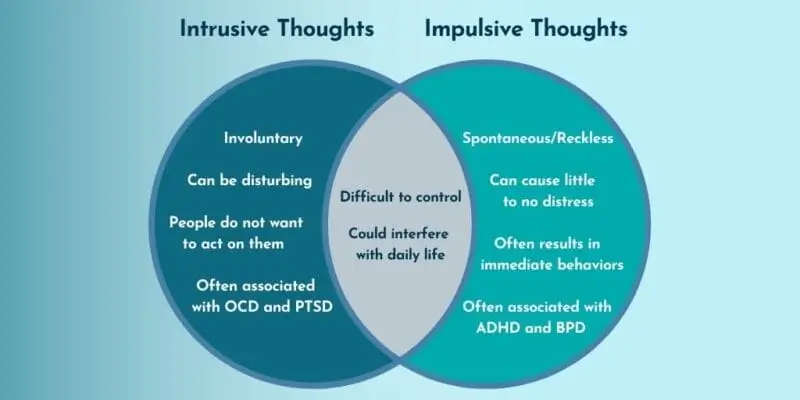
We all experience unexpected things popping into our minds, but understanding intrusive vs. impulsive thoughts can help you make sense of what is happening. An intrusive thought is an unwelcome, often disturbing idea that gets stuck in your head, while an impulsive thought is a sudden urge to act without thinking it through. If you are struggling with these mind tricks, finding a trusted partner like Safer Psychiatry can help you figure out what these patterns mean for your mental well-being.
What Are Intrusive vs. Impulsive Thoughts?
When we look closely at intrusive vs. impulsive thoughts, the main difference comes down to whether you actually want to act on them. Intrusive ideas shock or upset you because they go completely against your true values and morals. On the other hand, a sudden urge to jump into a pool with your clothes on or buy something expensive on a whim is driven by a lack of an internal filter. Knowing the details of intrusive vs. impulsive thoughts helps you see that one is a passive, scary image while the other is a sudden push toward an action.
What Causes These Unwanted Thoughts?
Your brain is constantly processing millions of data points, and sometimes it misfires, creating a heavy battle of intrusive vs. impulsive thoughts. Stress, lack of sleep, and brain chemistry imbalances can cause your mind’s normal filtering system to glitch. When these filters fail, a person might experience severe impulsive thoughts or OCD traps, where a sudden urge is immediately followed by massive anxiety. If you need help managing how your brain responds to these glitches, professional medication management can be a highly effective way to balance your brain chemistry.
Are They Linked to Anxiety Disorders?
Anxiety acts like rocket fuel for both sides of the intrusive vs. impulsive thoughts debate. When your nervous system is on high alert, it treats random, passing ideas as massive threats that require immediate attention. This heightened state of worry makes it incredibly difficult to tell the difference between intrusive vs. extrusive thoughts, making a person feel like they are completely losing control of their own mind. The more you worry about why you had a specific thought, the more frequently that exact thought will return to bother you.
Can OCD Cause Unwanted or Urgent Thoughts?
Obsessive-Compulsive Disorder (OCD) is deeply tied to the ongoing cycle of intrusive vs. impulsive thoughts. In OCD, an unwelcome idea triggers an intense, urgent need to perform a ritual or action to make the bad feeling go away. People living with this condition frequently struggle with intrusive vs. impulsive thoughts in Florida and all over the world, seeking specialized care to break the exhausting cycle. The pressure to act can feel overwhelming, but therapy helps patients realize they do not have to give in to the urgency.
Common Symptoms and Real-Life Examples
Real-life examples make it much easier to separate the two sides of intrusive vs. impulsive thoughts. An intrusive example is a loving parent suddenly visualizing dropping their baby, which fills them with instant horror and guilt. An impulsive example is a driver suddenly thinking about swerving off the road or a person feeling an intense urge to blurt out a rude comment during a quiet meeting. If you are trying to understand why your brain responds so strongly to these sudden mental signals, genetic testing can offer valuable insights into how your specific body processes psychiatric treatments.
How These Thoughts Affect Daily Life
Living with a constant storm of intrusive vs. impulsive thoughts can leave a person feeling completely exhausted by the time evening arrives. You might find yourself avoiding certain places, driving routes, or social gatherings out of fear that a scary thought or sudden urge will take over. This constant state of self-doubt can hurt your performance at work and strain your relationships with family and friends. When you spend all your mental energy fighting your own brain, it leaves very little room to enjoy the present moment.
How Mental Health Professionals Make a Diagnosis
Doctors and therapists look closely at patterns to determine where you fall on the spectrum of intrusive vs. impulsive thoughts. They will ask how long these ideas last, how much distress they cause you, and whether you feel forced to perform specific actions to quiet them down. A proper evaluation helps ensure you receive a personalized treatment plan rather than a generic guess. Knowing the root cause changes everything, transforming a confusing mental battle into a manageable medical condition.
Treatment Options and Therapy Approaches
You do not have to live at the mercy of intrusive vs. impulsive thoughts forever because excellent medical treatments are readily available. Cognitive Behavioral Therapy (CBT) teaches you to change how you react to random mental noise so it loses its power over you. Exposure and Response Prevention (ERP) is another gold-standard therapy that safely trains your brain to sit with an uncomfortable idea without reacting to it. Combined with the right medical guidance, these therapeutic approaches help you retrain your brain to dismiss harmless mental static.
Self-Help Tips for Managing Unwanted Thoughts
Learning simple daily habits can significantly lower the intensity of intrusive vs. impulsive thoughts over time. When an unwelcome image pops up, practice labeling it simply as “just a thought” instead of fighting it or feeling deep shame. Grounding exercises, like focusing on five things you can see and four things you can touch, can pull you right out of a stressful mental loop. Remember that having a thought is never the same thing as actually committing an action.
When Should You Seek Professional Help?
If your personal mix of intrusive vs. impulsive thoughts keeps you awake at night or stops you from leaving the house, it is time to talk to an expert. You do not need to wait until you hit a total breaking point before reaching out for high-quality mental health support. Getting professional guidance early can save you months of silent frustration and help you reclaim your peace of mind much faster. Your mental health is worth protecting, and support is always available.
Final thoughts
Navigating the complex world of Intrusive vs. Impulsive Thoughts become much easier when you have a dedicated, compassionate clinical team standing right by your side. You deserve to live a life free from the constant weight of sudden anxieties, exhausting doubts, and scary mental loops. Ready to take back control of your peace of mind? Please connect with Safer Psychiatry today to schedule your personalized consultation.
Frequently Asked Questions
Q1: Can anxiety make my impulsive urges feel much worse?
Yes. When anxiety levels are high, your nervous system is hyper-sensitive, which makes sudden thoughts feel incredibly intense, dangerous, and urgent.
Q2: Are intrusive thoughts a sign that I am secretly a bad person?
Not at all. In fact, the horror you feel proves the thought goes completely against who you are, meaning you have no true desire to act on it.
Q3: How does a therapist help me stop these random thoughts?
Therapists use specialized methods like CBT and ERP to teach your brain to ignore the thoughts so they slowly fade away on their own.
Q4: Is medication always required to treat these conditions?
No, medication is not always mandatory. While it helps many people balance their brain chemistry, many individuals find great success using talk therapy alone.
Q5: What should I do the very moment a scary thought pops up?
Take a slow breath, acknowledge the thought without judging yourself, label it as harmless mental static, and gently shift your focus back to what you were doing.